

What Is a Virtual Recruiter?
A virtual recruiter is a recruiting function that operates remotely or autonomously — either a human recruiter working outside a traditional office, or an AI-powered system that conducts candidate screening interviews, evaluates responses, and produces ranked shortlists without requiring live recruiter involvement. As part of the broader shift toward AI candidate screening, the term increasingly refers to software — not people.
The Traditional Virtual Recruiter (Human, Remote)
The original meaning of “virtual recruiter” referred to freelance or contract recruiters who work remotely — sourcing candidates, conducting phone screens, and managing pipelines from a home office. Offshore virtual recruiting assistants became popular as agencies looked to reduce costs by outsourcing the first-round screening to lower-cost markets. This model works, but it still scales linearly: more candidates means more headcount.
The AI Virtual Recruiter (Automated Screening)
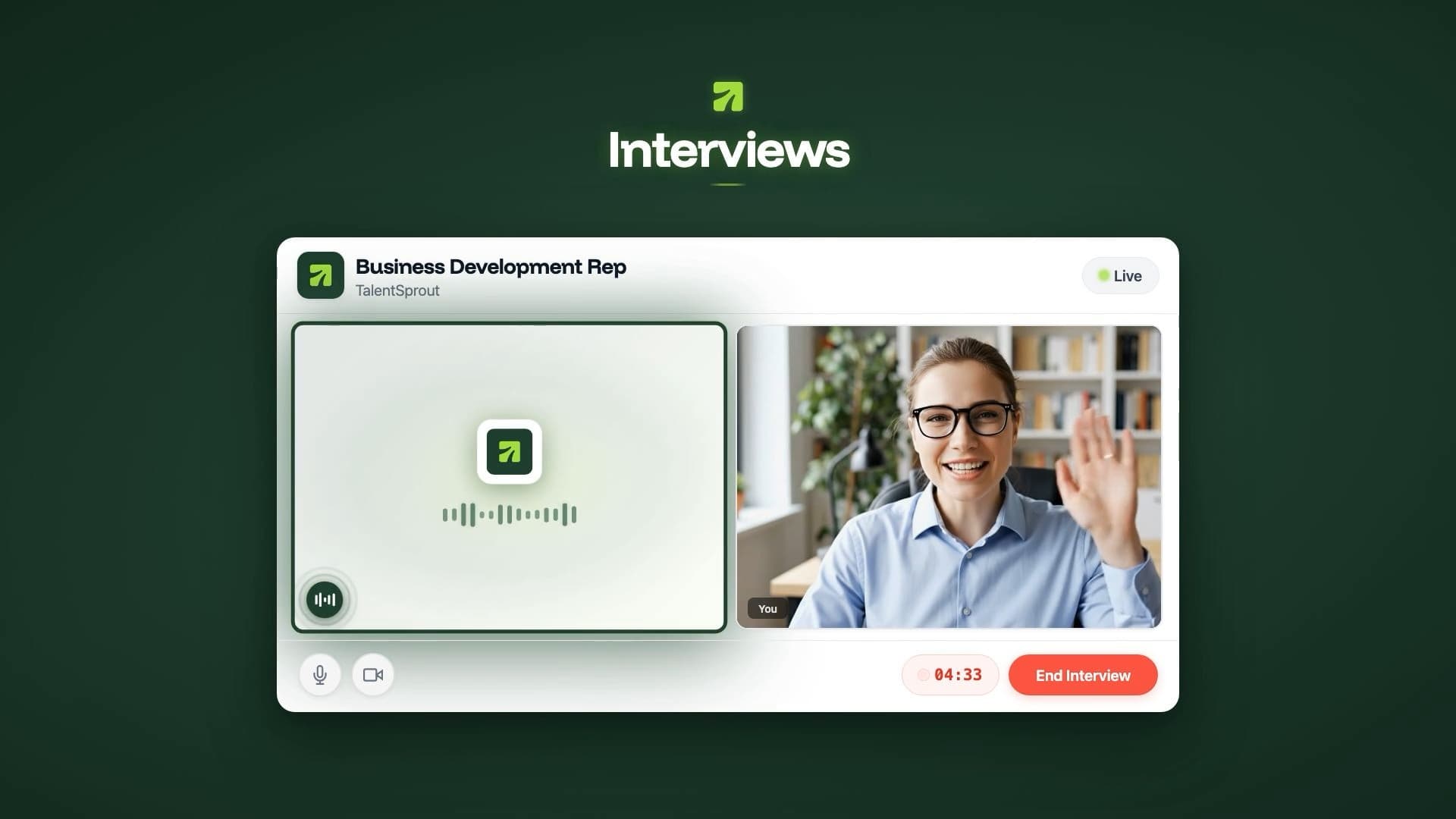
An AI virtual recruiter is software that conducts structured screening interviews — voice, video, or both — asks role-specific questions, evaluates candidate responses against a scoring rubric, and delivers ranked shortlists to recruiters. The recruiter defines the role and criteria; the virtual recruiter handles the repetitive first-round screening at scale.
The key difference from human virtual recruiting: an AI virtual recruiter can screen 50+ candidates simultaneously, operates 24/7 across time zones, and produces consistent, structured scorecards for every candidate. It replaces or compresses the phone screen — not the recruiter. Your team still makes every hiring decision, but they make it faster and with better data.
Where the Industry Is Heading
The term “virtual recruiter” is increasingly used to describe AI systems, not remote humans. Companies like ConverzAI and Fountain market their products as virtual recruiters. The shift reflects a broader trend in virtual staffing: AI is handling the repetitive, high-volume screening work that used to require dedicated headcount — freeing recruiters to focus on relationship-building and closing placements.
How AI Virtual Recruiters Work
Three steps from role setup to scored shortlist.
Candidates Receive a Screening Link
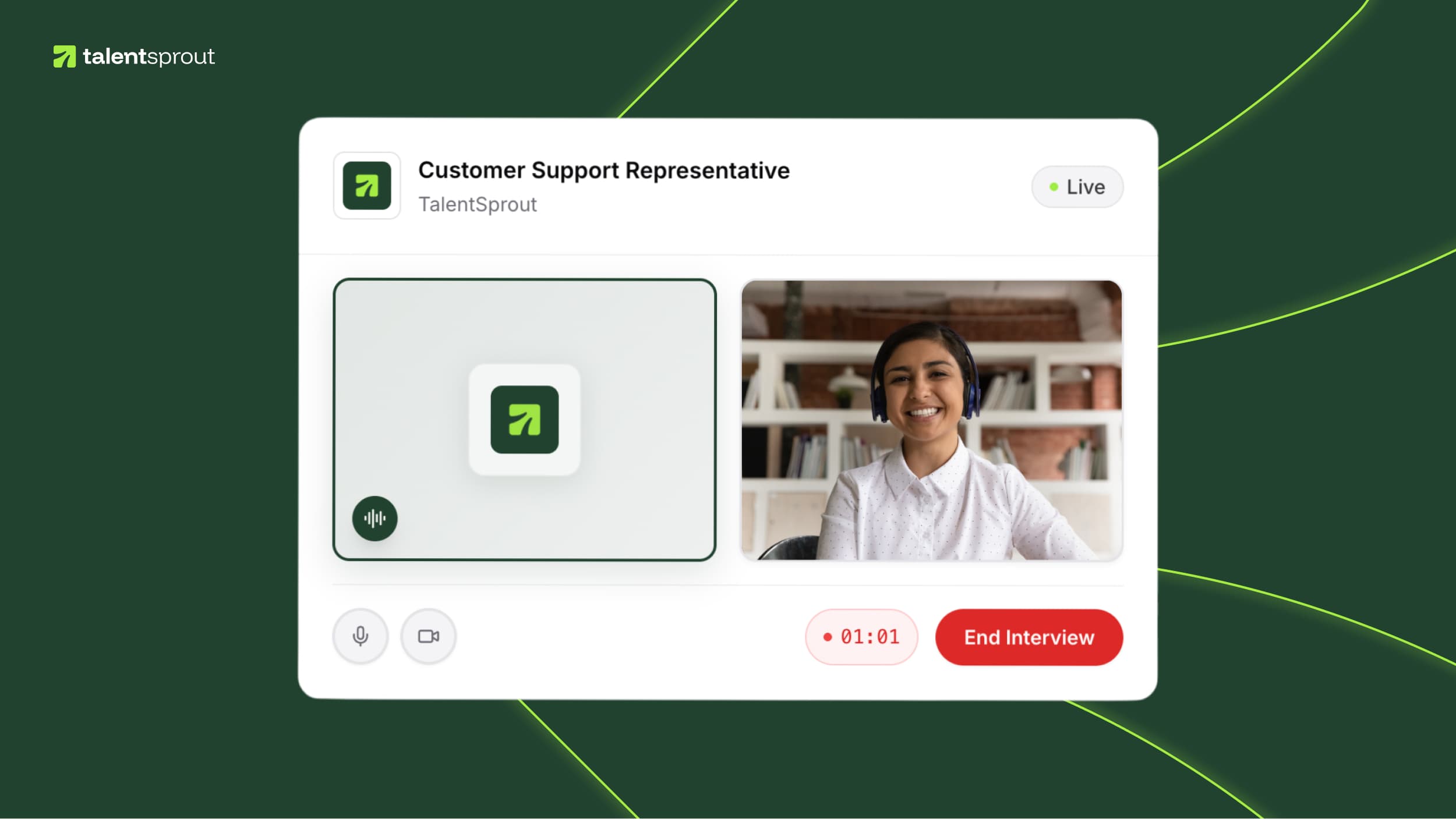
The recruiter sets up the role and scoring criteria. Candidates receive a link via email, SMS, or embedded in a job posting. No scheduling, no app download. They complete it when it works for them — nights, weekends, across time zones.
AI Conducts the Interview
The AI virtual recruiter asks structured, role-specific questions. It adapts with intelligent follow-up questions based on candidate responses. Voice, video, or both. Most interviews take 6–10 minutes.
Recruiters Review Scored Shortlists
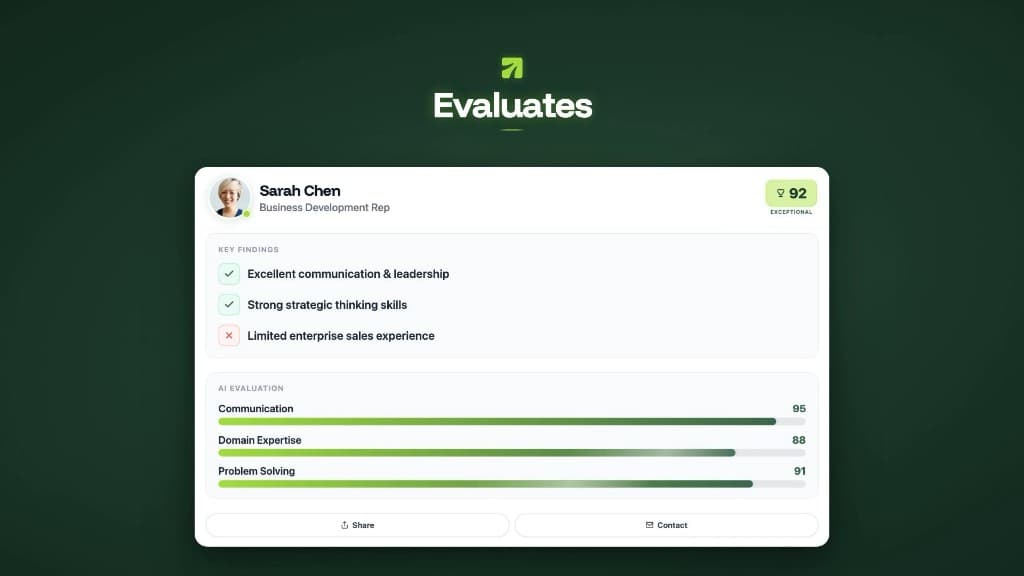
Recruiters see a ranked list of candidates with scores, evidence summaries, and links to full recordings and transcripts. The best candidates surface to the top. Shortlist in minutes, not days.
For teams that want to filter before the interview stage, AI resume screening can serve as the first gate — automatically scoring and ranking resumes so only qualified candidates receive the interview link. Teams that want the simpler, async-only version can start with a one-way video interview workflow and evolve to conversational voice screening once completion stalls. For a step-by-step implementation roadmap, see the staffing automation guide.
This is candidate-initiated, not cold-calling
Unlike AI cold-calling systems that phone candidates without consent, modern AI virtual recruiters are candidate-initiated. The candidate receives a link and chooses when to complete the screening on their own schedule. No unsolicited calls, no interruptions. This is the critical difference — and it's why completion rates are high and candidate feedback is positive.

Virtual Recruiter vs. Traditional Phone Screening
A side-by-side comparison of how AI virtual recruiting stacks up against manual phone screens.
| Criteria | Traditional Phone Screen | AI Virtual Recruiter |
|---|---|---|
| How it starts | Recruiter calls or schedules a call | Candidate receives a link, completes on their own time |
| Who drives it | Recruiter asks questions live | AI asks structured questions with adaptive follow-ups |
| Time per candidate | 15–30 minutes + scheduling overhead | 6–10 minutes, fully async |
| Output | Notes in recruiter's head or ATS | Scored assessment, ranked shortlist, recording |
| Scalability | Limited by recruiter headcount | Send to 50+ candidates simultaneously |
| Candidate experience | Phone tag, voicemails, no-shows | Complete anytime — nights, weekends, any timezone |
| Cost per screen | Recruiter salary time (~$15–25/screen) | Platform fee (~$2–5/screen at scale) |
Why Staffing Agencies Are Moving to AI Virtual Recruiters
Three problems driving the shift from manual phone screening to virtual recruitment.
The Phone-Tag Problem
Recruiters leave voicemails. Candidates don't call back. When they do, the recruiter is on another call. Rescheduling happens 2–3 times per screen. For staffing agencies managing 10+ client orders simultaneously, this coordination overhead consumes 40–60% of a recruiter's day. Every day without filling an order is lost revenue.
The Scalability Problem
A recruiter can screen maybe 8–10 candidates per day by phone. A voice AI recruiter can screen 50+ simultaneously. For agencies that need to ramp up quickly when a new client contract lands, AI virtual staffing is the difference between filling the order first or losing it to a competing agency.
The Consistency Problem
Different recruiters ask different questions. Quality varies by time of day, energy level, and unconscious bias. A digital recruiter uses the same rubric for every candidate — consistent, structured evaluation that produces comparable scorecards. The hiring manager receives standardized candidate packets, not subjective notes.
What Makes a Good AI Virtual Recruiter
Four capabilities that separate effective virtual recruiting tools from tools that gather dust.
Candidate-Initiated, Not Cold-Calling
The biggest concern about AI virtual recruiters is unsolicited phone calls. A good virtual recruiter is opt-in — candidates receive a link and choose to complete the screening. This respects candidate autonomy and drives high completion rates.
TalentSprout interviews are always candidate-initiated — candidates complete screening on their own schedule.
Structured Evaluation, Not Just Recording
Some tools just record video answers for recruiters to watch later — that's one-way video, not virtual recruiting. A real AI virtual recruiter evaluates responses against scoring criteria and produces a ranked shortlist with evidence summaries.
TalentSprout scores candidates 0–100 across customizable criteria with full transcript evidence.
ATS Integration
Results need to flow back into the agency's ATS automatically — Bullhorn, Zoho Recruit, JobAdder, and others. No swivel-chair data entry. The scored shortlist should appear directly in the candidate record.
TalentSprout writes scores and summaries directly back into your ATS.
Multilingual and Accessible
For agencies hiring across geographies or in multilingual markets, the virtual recruiter needs to support the languages candidates speak. Mobile accessibility is essential — most candidates complete screening on their phones.
50+ languages supported. Candidates complete interviews on any device, no app download required.
For a full breakdown of TalentSprout's capabilities, see our features overview and ATS integrations. You can also see how TalentSprout compares to HireVue and 6 other AI interview platforms in our honest comparison guide, or explore our 40+ strategic interview questions to use in your screening.
Real Results: Virtual Recruiting in Practice
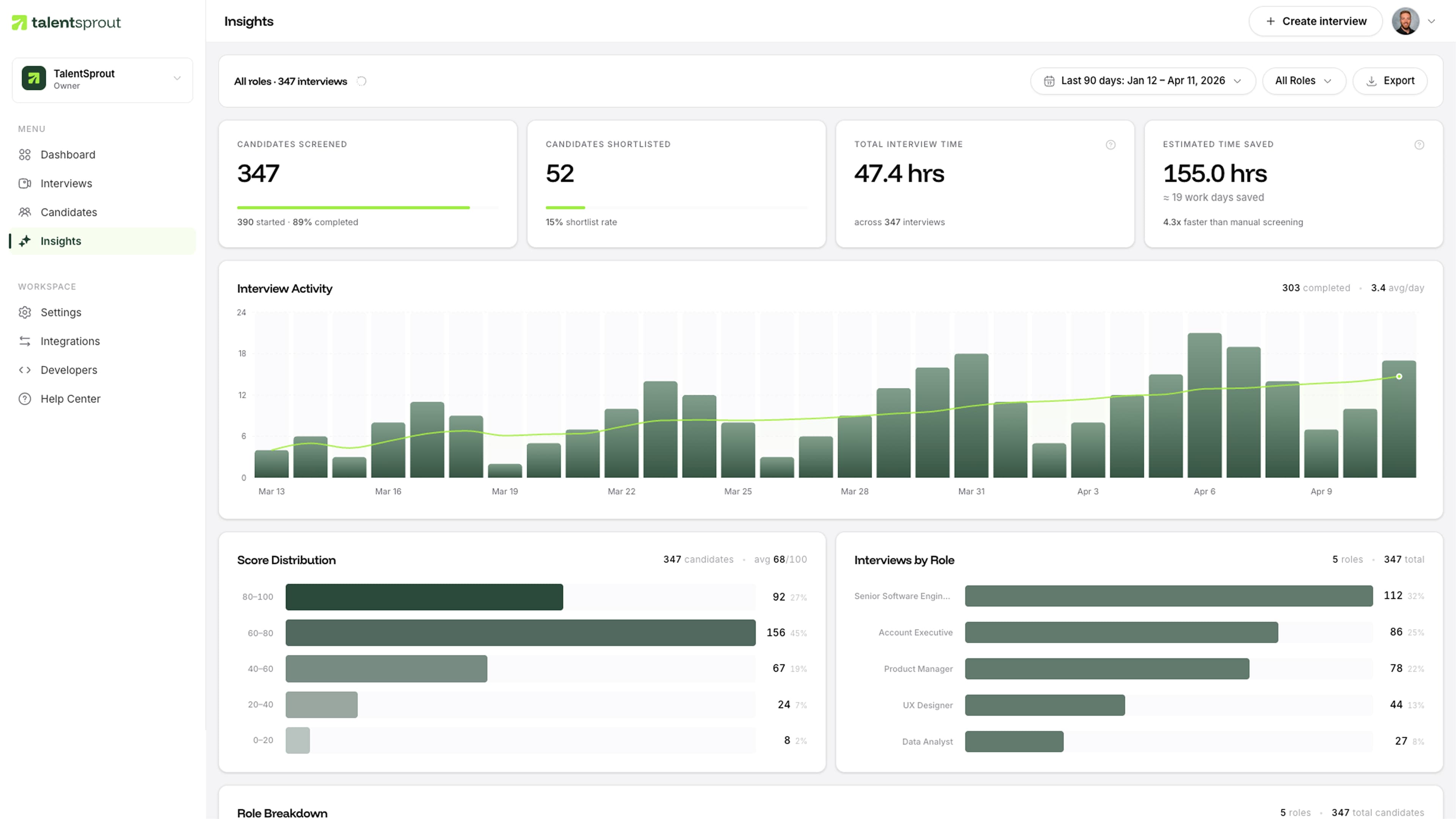
When RVS iGlobal, an IT outsourcing firm, replaced their first-round phone screening with an AI virtual recruiter, the results were immediate. The team deployed virtual recruiting across 7 active roles. Candidates received screening links as part of the application flow and completed interviews on their own schedule.
Within 4 weeks, the team screened 140 candidates with 41 auto-shortlisted. Shortlist quality improved from 16% to 43% as the team refined scoring criteria. The platform handled approximately 15 hours of screening time. The team adopted organically — expanding from 4 to 7 roles without being asked.
“This has really helped us, especially in the service analyst role. We didn't speak to the candidates initially — when the candidates applied we already got the shortlisted list of all the resources and we directly forwarded their profiles to the client. There was not a conversation required from our end, so it really saved our time.”
“With the use of TalentSprout I actually think this might be a good sign because we can turn around role requirements for our clients a lot easier and quicker than we could previously.”
For a deeper look at how AI candidate screening works, see our complete guide to AI candidate screening.
How to Get Started with a Virtual Recruiter
Whether you're a staffing agency or recruitment platform — here's how to start seeing results within your first week.
For Staffing Agencies
Learn more →- Start with 1–2 high-volume roles
- Set up scoring criteria matching client requirements
- Send screening links to your next candidate batch
- Review ranked scorecards the next morning
For Recruitment Platforms
Explore API docs →- Embed AI screening as a native platform feature
- White-label the candidate experience under your brand
- Use the API for programmatic interview creation
- Offer virtual recruiting as a value-add to your customers
Frequently Asked Questions
What recruiters and hiring teams ask about AI virtual recruiters
A virtual recruiter is a recruiting function that operates remotely or autonomously — either a human recruiter working outside a traditional office, or an AI-powered system that conducts candidate screening interviews, evaluates responses, and produces ranked shortlists without requiring live recruiter involvement.
One-way video tools record answers to static, pre-set questions — the recruiter still watches each video manually. An AI virtual recruiter conducts a dynamic, conversational interview with follow-up questions, evaluates responses against scoring criteria in real time, and produces a structured scorecard. The output is a ranked shortlist, not a pile of videos.
Yes. Real-world data shows 140 candidates completed AI virtual recruiter interviews averaging 6 minutes each — many on nights and weekends. The key is framing and accessibility: mobile-first, no app download, and a brief time commitment drive high completion rates.
Most AI virtual recruiter interviews take 6–10 minutes. Candidates answer structured questions at their own pace, and the AI evaluates responses in real time. The process is designed to be thorough enough to produce useful scorecards while respecting candidates' time.
Yes. AI virtual recruiter platforms integrate with popular applicant tracking systems like Bullhorn, Zoho Recruit, Greenhouse, Lever, and Workable. Interview scores, summaries, and scorecard links sync directly to the candidate record.
No. AI cold callers contact candidates unsolicited by phone. A virtual recruiter screening is candidate-initiated — candidates receive a link and choose when to complete the interview on their own schedule. This is the key difference, and it's why completion rates are high and candidate experience is positive.
No. AI virtual recruiters replace specific tasks — resume scoring, first-round phone screens, scheduling, structured evaluation — not the recruiter role. Human time shifts upstream to hiring-manager intake, offer closing, and client strategy. For the week-by-week data, see the breakdown of will AI replace recruiters.
Pricing varies by platform and volume. TalentSprout plans start at $199/month and include unlimited AI interviews, scoring, analytics, and branding. At scale, the cost per screen is roughly $2–5 compared to $15–25 for a manual phone screen. Most agencies see ROI within the first week.
Leading AI virtual recruiter platforms support 50 or more languages. Candidates can complete their interview in their strongest language, and recruiters receive translated scorecards and summaries. This is essential for agencies placing candidates in multilingual markets.